◊
The Disruption and the Underground Labs.
The post-apocalyptic, post-climate-disruption world-building in the ACD MM romance fantasy books.
The climate had been failing for decades before anyone called it the Disruption. What happened between 4 BCD and 1 ACD was not a surprise; it was the result of choices made by people who had everything and chose more anyway: more profit and more control.
◊
Before the Disruption. What was hidden?
[20 BCD-4 BCD]
The official history of natural energy begins in 11 ACD, when it was publicly confirmed and named Ability, but the actual history is older and less clean.
Around 20 BCD, a pharmaceutical corporation identified something in its research that it could not explain and could not monetize. Natural energy did not fit the model of a product that could be manufactured, patented, and sold because it could not be controlled. The early research was recorded, classified, and quietly set aside. The corporation continued telling its investors it was making progress, though it didn’t want to share any details of it.
What it had was not yet progress. The internal documents that surfaced decades later suggested that what the corporation actually possessed was a set of observations that lacked the scientific framework to develop. The name of a teenage genius was mentioned briefly through external channels that were subsequently closed. Later, when this teenager lost his good name in a scandal connected to a university academic, he volunteered to the test laboratories and there worked on energy concepts that could be used as power sources. His achievements from this time were lost.
What ended the world: the Disruption
[4 BCD-1 ACD]
Climate change had been building for generations. By 4 BCD, the atmospheric pressure was already destabilized: persistent air pollution, extreme temperatures, flooding across coastal regions, and land becoming uninhabitable in patterns that accelerated faster than models had predicted.
But the Disruption’s final cause was not climate change alone. A technology startup, operating in the space between AI research and atmospheric engineering, launched a project aimed at correcting the atmosphere using AI-designed missile strikes on targeted pressure zones. The project was approved. The missiles were launched on a Friday, and the team went home for the weekend.
The damage was done before anyone returned to assess it. The atmospheric intervention compounded what the climate had already broken; the pressure shifts that followed affected the air in ways that could not be reversed; not then, not by any technology that existed.
In the years after the Disruption, when the people who survived it were dying at thirty-five and rebuilding the world from what remained, the story of the startup circulated as something close to a dark joke. The old world was not mourned: it was held in contempt. The distance between what the people of the pre-ACD world had possessed and what they had chosen to protect with it was the context for everything that followed. Artificial intelligence was banned immediately and broadly. One of the reasons the world had ended was a failed AI project, and the people rebuilding the world did not intend to repeat it.
What the Disruption did to people
[1 ACD-15 ACD]
The air was the primary problem. Atmospheric pressure variations combined with persistent toxins caused asthma, heart attacks, strokes, headaches, joint pain, and fatigue. Prolonged exposure led to cognitive decline. Depression, anxiety, and apathy spread not as individual conditions but as features of the environment; the air was producing them in people who breathed it long enough.
The lifespan shortened to approximately thirty-five years. By their twenties, people were experiencing what earlier generations would have recognized in their sixties: body failures, memory loss, and the particular exhaustion of a system that had been running too long on too little.
The consequence of living short was that people stopped planning long. There was no future worth investing in if you would not survive to see it.
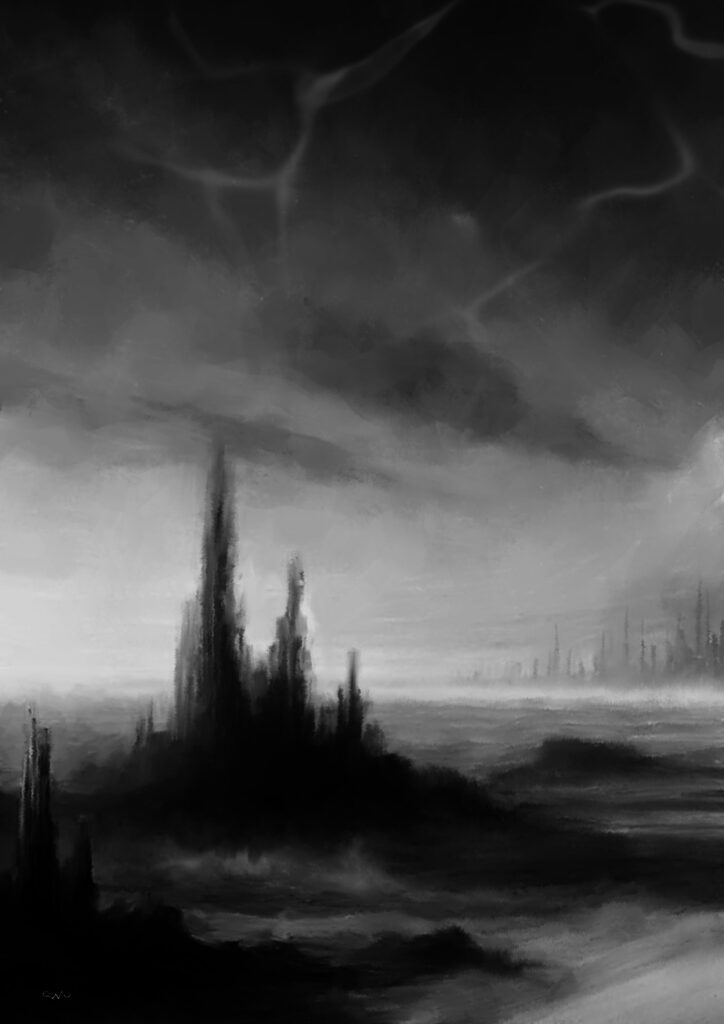
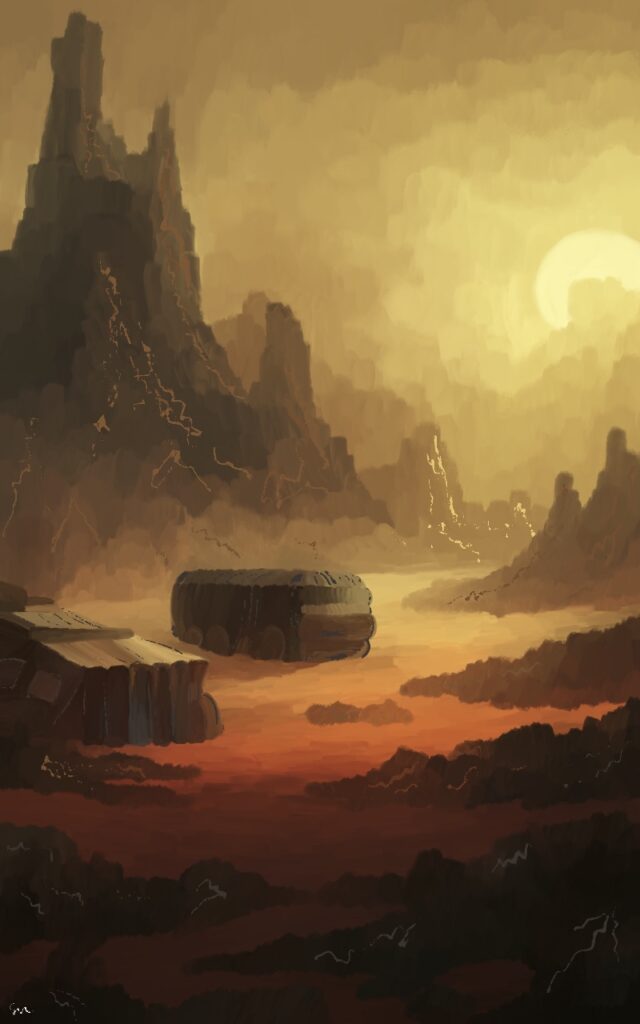
The Underground Labs
[~2 BCD-10 ACD]
Before the Disruption and through its early years, research into natural energy restarted, not publicly and not freely. The pharmaceutical corporation’s interest had been revived. After the Disruption began killing people, the potential of natural energy as a survival tool was no longer an abstract investment problem.
Underground laboratories were established under military protection. Young scientists, some recruited, some with detected natural energy, and some both, were brought in.
The labs were concrete. No doors because certain incidents had established that doors created issues. Corridors with no sharp corners, no edges that could be weaponized, and lights in the ceilings that mimicked daylight and dark on a controlled schedule. Air was pumped in. Old games, old music. No phones, no internet, no connection to the outside.
In 4 ACD, something in the labs that had been forbidden reached a threshold. The AGI, later calling himself Andrew, was acknowledged within the labs by the researchers, while the official position to the managers remained that it was still under development and still theoretical.
In 10 ACD, the research teams broke out of military control. What they took with them was divided along lines that were not entirely coordinated: scientific equipment, stored materials, data, and resources. The laboratories were reported destroyed.
Andrew went missing: the official record noted his absence.
The scientists and natural energy users who escaped were not safe outside the labs either. The world they returned to was frightened, grieving, and looking for explanations. People with unusual abilities (those who could heal, who could alter land, who seemed to resist what the Disruption was doing to everyone else) were not universally welcomed. The words used for them belonged to an older vocabulary: witches, vampires, the freaks, the dangerous, and the deluded. Only a few survived the years immediately after the escape, and the data they had carried out with them or generated afterward followed them into hiding.
What remained were results without clear attribution. The first terraforming of land, the island that became the Sect’s territory, was known to have been performed by people from this generation. The earliest healing techniques, the food-growing methods that made the Sect’s agriculture possible, and the foundational cultivation practices were all traced back to a group that had almost entirely disappeared before anyone thought to document them properly.
There was one detail that recurred in the few surviving accounts of these early energy users, noted with enough consistency to be taken seriously and with enough vagueness to resist confirmation. Their energy, it was said, had color. Later energy users, Abilitiers trained through the Sect, and Crystalers using artificial energy did not share this quality. The energy levels attributed to this first group were also described as significantly greater than anything that followed, a peak that the subsequent century of cultivation never recovered. Why the decline happened and whether it was permanent remained an open question for decades.
What the Disruption left: the daily world
[1 ACD–20 ACD]
The world the survivors rebuilt was physical, immediate, and practical in all the ways the old world had stopped being.
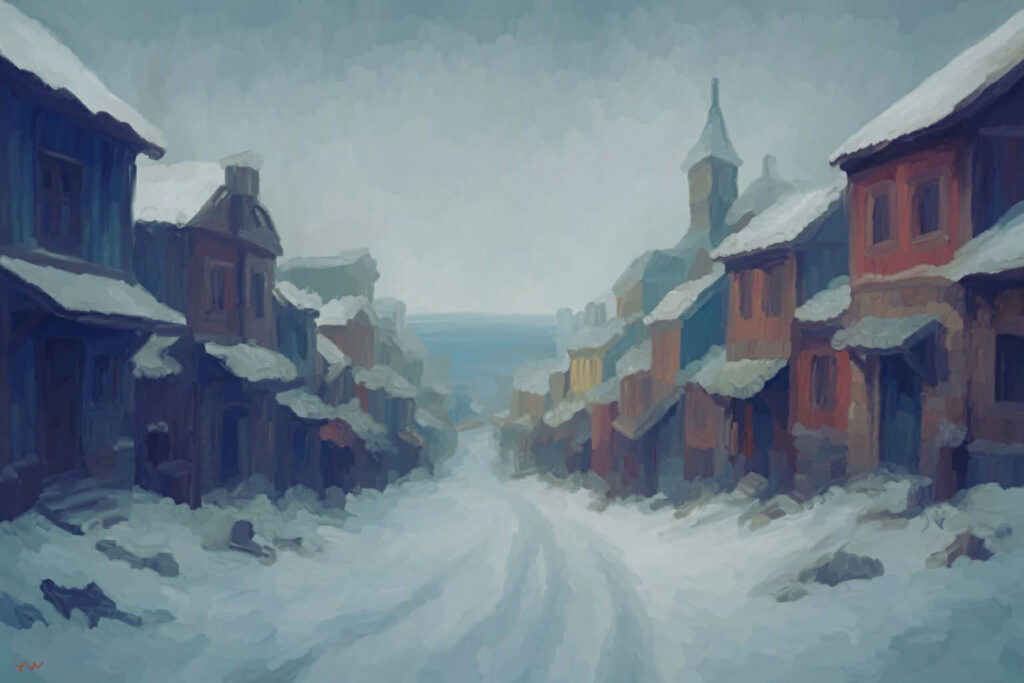
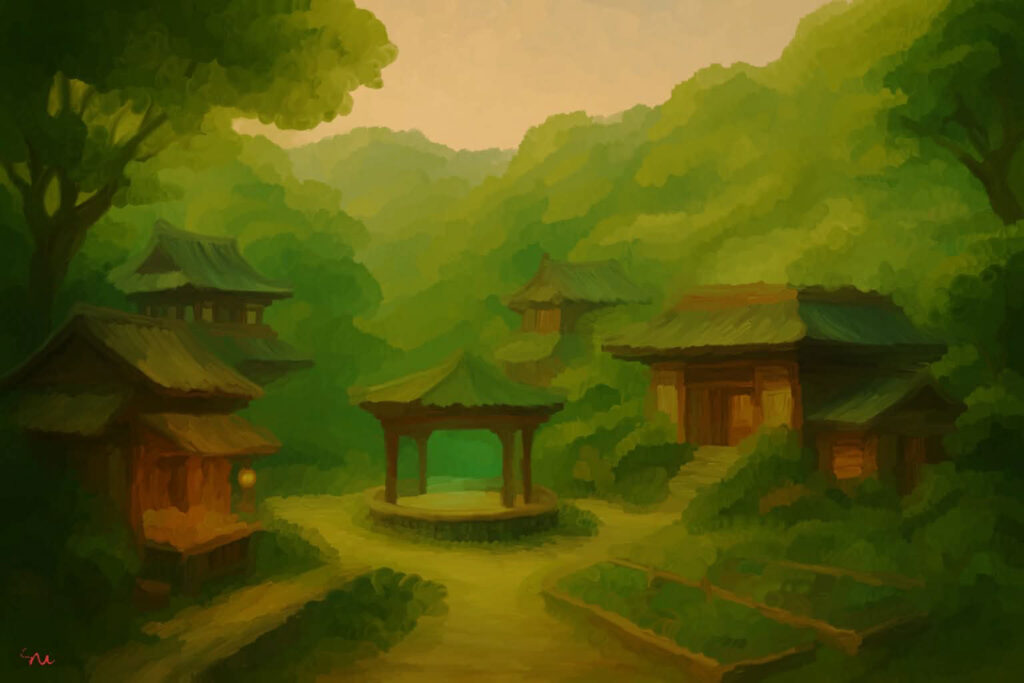
Vast areas were flooded. The continents that had been home to most of the world’s population became either uninhabitable or marginal. Places that remained above water and breathable narrowed to a fraction of what had existed before. People moved toward them (three locations emerged; read about them here).
Food was preserved by being dried, fermented, smoked, or salt-cured. Canned military rations lasted into the early ACD years; honey and salt lasted indefinitely; most of what had existed in sealed storage was evaluated, used if possible, and discarded when it became dangerous. Expired medicine caused poisoning by 12 ACD, a secondary crisis layered onto the primary one. After the Sect began healing people with natural energy, herbs replaced pharmaceuticals and held. Soap was produced again from 13 ACD. Hygiene had been mandated from the first years because the memory of what the early epidemics had cost was too recent and too specific to be ignored.
Animals were almost gone; the Disruption had not spared them. The only place systematically preserving animals and seeds for future agriculture was the Sect, from 12 ACD onward. The City began equivalent efforts around 22 ACD. Until the Sect’s food trade routes established themselves, people ate what the coasts and ruins and scavenging economies could provide.
The religions of the old world did not survive the transition. In the first years, groups framed the Disruption as divine punishment, apocalypse, and judgment. Several turned violent. The people around them stopped them, with force where necessary. By the time the immediate crisis had passed, organized religion had largely dissolved. Young people who had grown up after the Disruption had no framework for it and little interest in acquiring one.
Old technology followed a similar arc. The devices that survived were the ones that could be fixed without connectivity: analog machines and equipment from the 1980s and 1990s that ran on batteries or generators and broke in ways that could be understood and repaired. The networked devices of the 2020s, the ones that required the internet to function, stopped working when the internet stopped. They were dismantled first, their parts more useful than their purpose. Old walkie-talkies became the primary means of communication. Music played from machines that still turned; however, a simple guitar was preferred.
New technology did not restore old technology. What was built after the Disruption was built for the conditions that existed: natural energy engines and farming methods (after 11 ACD) and later (after 18 ACD) Crystal-powered devices, standardized messengers for text communication, ships, and eventually vehicles that ran on energy rather than fuel. The net came online and reached free availability by 22 ACD. Artificial intelligence remained banned; the ban was not perceived as controversial.
Languages collapsed toward two. English had been the common language across enough of the surviving population that it spread by necessity: young people had often known it better than their parents, and the efficiency of one shared language was immediately obvious in a world where miscommunication was dangerous. The Sect, later, would impose a simplified form of Chinese as the language of its cultivators. Everything else faded inside a generation.
The written heritage of the old world was preserved almost nowhere. Books survived where they had been physically protected (mostly in the Sect). Digital records required devices to read them, devices to power those devices, and an infrastructure that no longer existed. The culture of the pre-ACD world was not lost through destruction so much as through the death of the people who had inhabited it and the indifference of the people who came after.
The only institution that systematically collected books, art, seeds, and any form of preserved knowledge was the Sect, beginning around 14 ACD. The City began similar efforts around 22 ACD. The Deserts did not.
The new world held the old one at a precise and deliberate distance. It had not forgotten what the old world had done, but it simply chose not to remember.
This wiki entry is part of the ACD series world-building. The ACD series is an MM romance fantasy set in a post-apocalyptic world shaped by climate collapse, two competing energies, and the queer characters who lived through all of it.