◊
The City, the Deserts, and the Sect.
World-building in the post-apocalyptic MM romance fantasy books.
The post-climate-disruption world did not collapse evenly. It sorted itself into three places, each with its logic for surviving what the old world had left behind. The City, the Deserts, and the Sect shaped every life lived in the first century after the climate collapse. The queer characters at the center of the post-apo MM romance fantasy series carried those places inside them long after the places themselves were gone.
The City | The Sect | The Deserts
◊
The City
[Fact: Antarctica, built near the ruins of McMurdo Station]
After the Disruption: the first city
7 ACD–18 ACD
When the migrations after the great floodings began, people followed what already existed at the Antarctic coast: the remnants of a scientific base, a partial sewage infrastructure, and proximity to the sea. What they carried with them filled the gaps: salvaged tools, food stores, clothing, and, in some cases, equipment taken from underground laboratories that the general population knew nothing about.
By 7 ACD, the settlement had grown large enough to need a name. It started lowercase and then didn’t… the City.
The land was above water. Around a hundred million people eventually lived within its limits, with more in the towns that appeared wherever the ground could hold them. But this happened later; what was right after the Disruption was a mess.
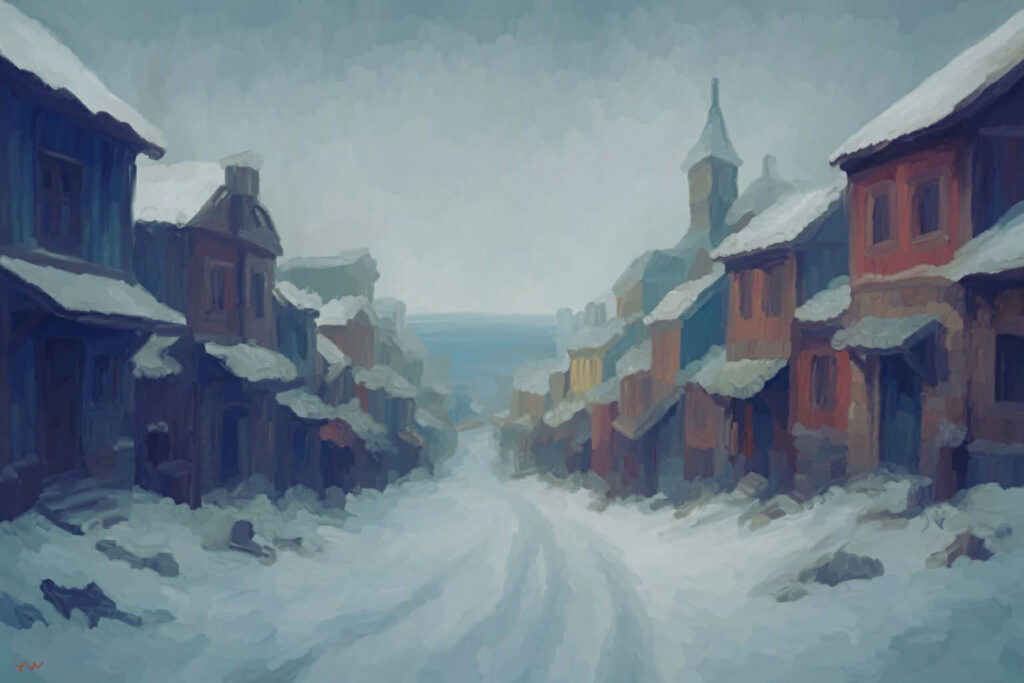
Buildings were whatever was available: ruins repaired, new constructions rising next to structures held together by luck and necessity. The sewage system was restored early and maintained firmly; the memory of what happened without it was too recent to ignore. Common bathhouses replaced the private plumbing most people no longer had access to.
At night, the City went dark. Candles lit interiors; the streets outside were black.
Cold came in off the water. In winter, snow settled on cracked concrete. In spring, dampness replaced it. The smell was constant: sea salt, fish from the drying racks, cooking smoke, and the chemical edge of whatever the laboratories nearby were processing. The sound was constant too: voices in many accents, the wind coming in hard between buildings, and underneath it all, coughing, because people still carried the Disruption in their lungs.
Food came from the coast: fish and seaweed, preserved in salt and smoke. The promenade near the research labs had small food stalls, repurposed trucks that hadn’t moved in years, used as counters. Life happened fast. Clubs opened, alcohol, drugs, art: all of it present. Thirty-five was a usual lifespan, so the City lived loudly.
When Crystals were announced and then the first successful insertion performed in 16 ACD, the direction changed.
◊
The Sect
[Fact: terraformed Greenland; rebuilt from a flooded island into a fully functioning agricultural territory]
After the Disruption: the founding
11 ACD–17 ACD
The island had been flooded. Then, in 11 ACD, three escapees from the underground labs arrived there on their sailboat, enhanced by their natural energy, and settled there together with other talented people.
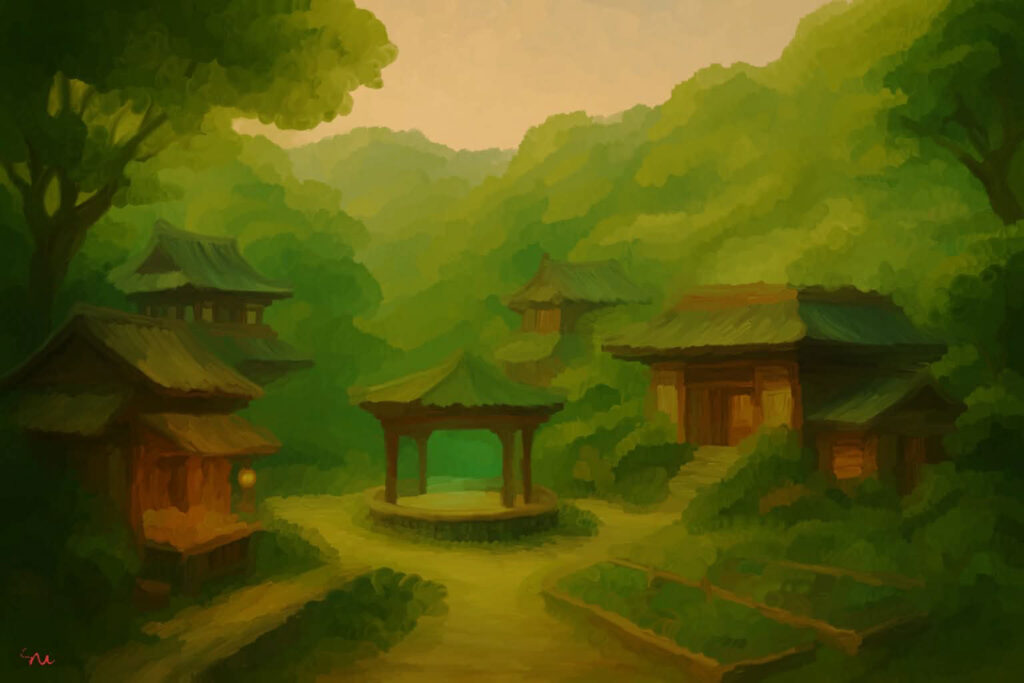
The terraforming happened once and held. What had been underwater became usable land: farming territory, forests, and a protected internal settlement with adjusted seasons and clean air. The toxins that persisted everywhere else in the post-climate-disruption world were absent inside the Sect’s walls. The light was softer than it had any scientific reason to be (the reason, in fact, was very personal). Newcomers called it magic, but it was thanks to the first energy users’ great powers, later never surpassed. Called Ability, it was the natural internal energy that had allowed some to survive the Disruption more intact than others.
The Sect formalized in 13 ACD around a community of people with Ability. From the start, the organization’s logic was oriented toward the long term: libraries were built and filled with everything that could be collected, including art. Cultivation grounds were established. Animals were preserved. But the orchard inside the walls was larger than food production required…
Buildings went up as collective work, members contributing energy to their construction. Shared investment that created shared ownership in a way that was both ideological and practical. The architectural style combined Japanese and Chinese elements with something Danish, built around heavy greenery, water features, training grounds, and a performance space. Sounds inside the compound were ordered: fabric moving, footsteps on wooden walkways, the controlled rhythm of cultivation practice, and bells marking gatherings.
The Sect’s clothes were specific: robes for cultivators and straw shoes. Tokens of energy-enhanced jade marked members. The language the founder imposed as the Sect’s official tongue was a simplified form of Chinese, framed as a cultivator’s elegance and practically a tool for creating separation from the outside world.
The Sect’s economic power rested on food. Terraformed Greenland produced wheat, vegetables, fruit, and livestock: abundance in a world where the Deserts were hungry and the City was dependent on fish and barter. Ships left the Sect’s bay twice a week: Tuesday and Thursday. That schedule organized inter-settlement politics more effectively than any formal agreement: whoever controlled access to food controlled the conversation.
The Sect smelled of apple blossom and clean linen, incense from the cultivation spaces, and fresh bread from the communal ovens. It was, by the account of anyone who had visited both, unlike anywhere else in the post-climate-disruption world.
◊
The Deserts
[Fact: primarily the continental ruins of Africa and other regions in Europe where climate collapse and infrastructure destruction made survival difficult but possible]
After the Disruption: the first camps
1 ACD–18 ACD
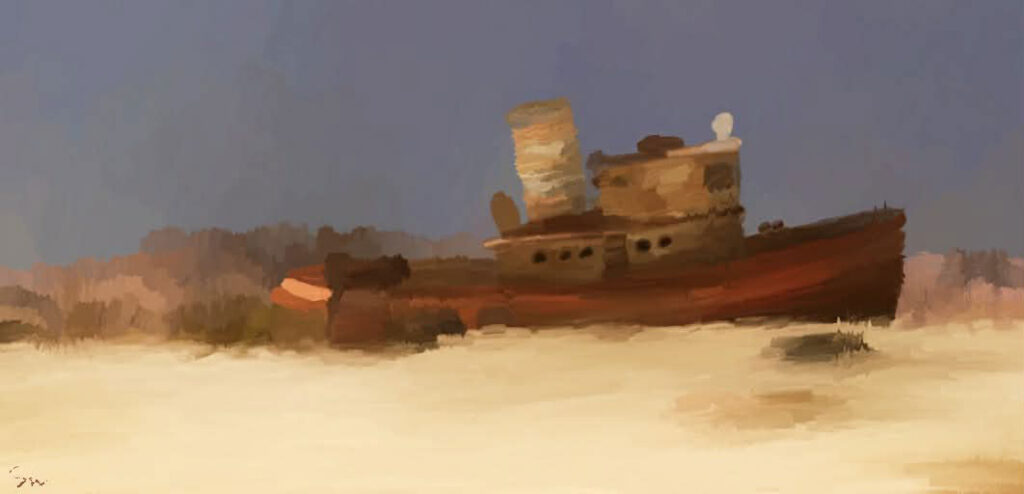
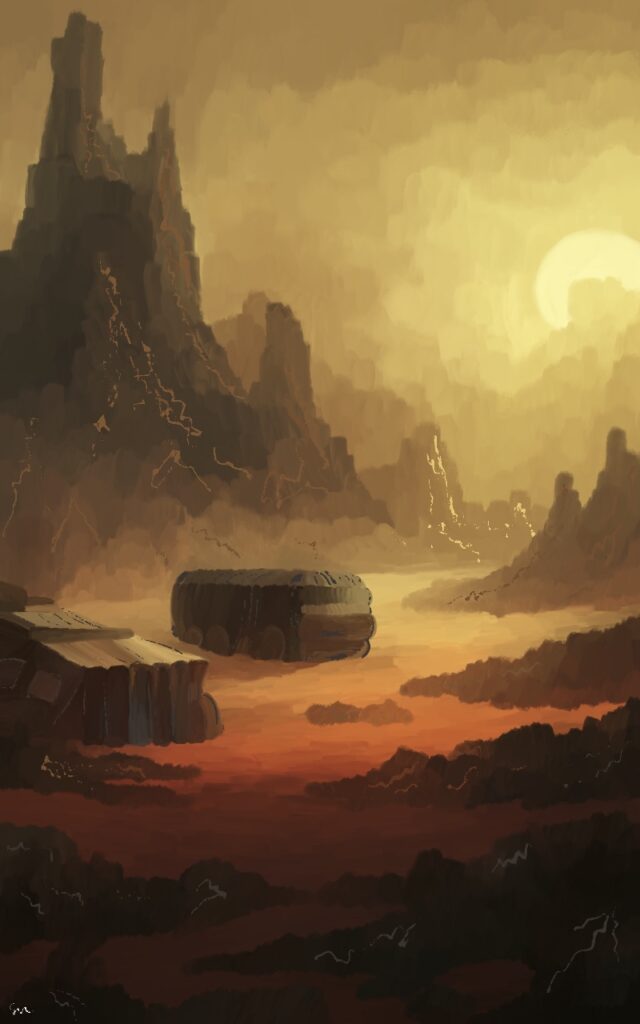
The Deserts were not a desert in the way the word had once been used. They were the ruins of the world that existed before: old mines, collapsed factories, former cities, and military warehouses sealed since the early Disruption period. What they shared was the look of abandonment: dust, rust, and sand moving in wind. Dry heat during the day, cold at night.
Camps formed wherever survival was possible: near coasts where small-scale fishing helped and near ruins where old goods could still be extracted. The scavenging economy was specific and serious: metal for repurposing and trade, plastic containers, glass jars, copper wire, solar panels if they still functioned, and fuel that older engines could process. Medicine was mostly expired by 16 ACD. And the books, because they were valuable, the Sect collected them.
The camps were organized simply. A few main tents for whoever held authority. Water pumps, because water existed underground, and that, at least, was not a crisis. Two tents for a kitchen assembled from salvaged parts. Sleeping arrangements were separated for basic hygiene, enforced not from ideology but from the memory of the epidemics that had swept through in 2 and 3 ACD. Clothes were scavenged, not made, so having two matching shoes was luck. People wore long hair and decorated themselves with whatever they found; the impulse toward beauty existed here too, in the middle of the dust.
Food was the recurring problem. Barter with the City using stones from old mines; specific salvaged goods helped but were never enough. What people ate followed its own post-collapse substitution logic: roasted grain where coffee had been, carob paste, fermented bean spreads, and grain-stuffed casings.
Literacy was rare. There were no materials and often no conditions for teaching it.
The sounds of the Deserts during this period: wind, constant; generators coughing when they worked; silence at night so complete that the wind was the only thing in it. The smell: dust in everything, rust, smoke from campfires and burned fuel, and sometimes, in the driest conditions, nothing at all.
The cartels
The camp networks grew, and not all in the same direction. Some organized around practical cooperation: shared defense, enforced hygiene, collective resource management, basic dignity as a survival strategy. Others followed the logic of accumulation: more camps, more people controlled, slavery first as a tool for keeping fighters loyal, then as a trade. The camp networks that operated this way expanded to five large settlements with many smaller satellites.
The Deserts’ cartels grew without serious opposition and eventually stopped pretending to be anything other than what they were. From small operations focused on finding energy-gifted individuals to exploit, the cartels expanded into territory control. After 18 ACD, forcing artificial Crystals onto people with natural Ability was common practice; it was either to punish them for not joining the cartels freely or to train them with artificial energy.

This wiki entry is part of the ACD series world-building. The ACD series is an MM romance fantasy set in a post-apocalyptic world shaped by climate collapse, two competing energies, and the queer characters who lived through all of it.