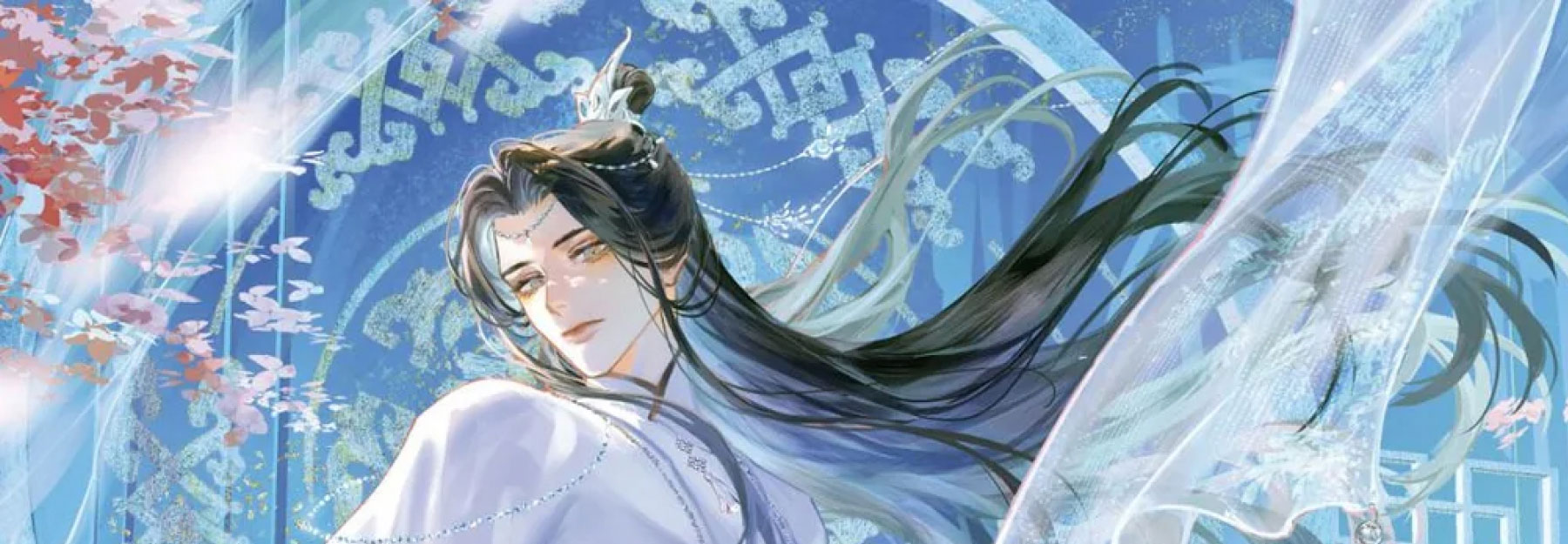
Danmei about the romance between a cat and a demon cultivator
(And why not to read it).
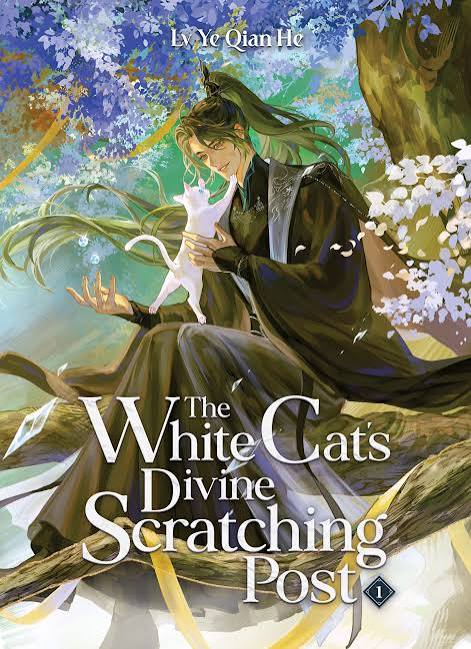
Covered: danmei ◊ “The White Cat’s Divine Scratching Post” Vol. 1 ◊
◊
The premise.
The story is supposed to be a comedic danmei about a former villain-ish cultivator, Mo Tianliao, reunited with his (now) shapeshifted cat Pawpaw, currently trying to win over his own former pet, and also trying to re-establish his position as a demonic cultivator lord. Backstory: the protagonist was a demonic cultivator known for forging the best spiritual weapons, and just as he was about to complete a weapon capable of destroying the world, the righteous sects banded together to take him down.
The idea is amusing. So I bought it, and if written well, this would be a fun read, could entertain, and bring a lot of laughter. However…
◊
What’s wasted.
The story is simplified to its maximum, and the potential goes unused. The dynamic between a human cultivator and a cat (a beast that can shapeshift into human form, but whose mindset, despite the human body, is still that of a cat) could invoke so many excellent scenes, so many romantic misunderstandings. And yet. There was one scene I loved; it was about the glass beads (when Tianliao confirms by this that he found his cat) and I wished there were more of these kinds of moments. The cat, at some point in the story, scratches Mo Tianliao’s face, using him as its scratching post, and slaps his face with its paw/hand. It’s fun, but not after it happens for the tenth time.
The world building problem.
This world building is evil, and I can’t comprehend why it’s told in a tone of voice as if it were normal and fun. Here’s what made me cringe the most: the situation of female cultivators (the so-called “vessels” for dual cultivation techniques) and the situation of the soul-beasts.
To explain: female cultivators whose constitution isn’t suited to cultivating their own power are, for the most part, enslaved and used by higher-powered cultivators as “vessels” for dual cultivation. So the great ones get greater, and the vessels are, well, sex slaves. What’s the way out of being a bed-slave in this world? So simple: sell yourself to a brothel, and at least then you can earn some money. That’s it: that’s the world building.
The same goes for the soul-beasts: hunted, sold as things. When a beast can transform into a human body, it’s sought after even more, because it can be used in cultivation and in bed. And that’s it. That’s the background in a comedy danmei, where every chapter ends on a funny beat.
Not to mention that our main character kills other cultivators without a blink, and the story moves on without pause, offering nothing deeper than “he had to kill them, so he did.”
… And the prose problem.
Seven Seas Entertainment took a story that had been published some time ago. The translation quality is just okay, but what the story is lacking (and what you would expect for the price of the English ebook or paperback) is editing. I understand that back when it was published online, the narration and style were good enough. But putting it on the shelf next to, say, Ballad of Sword and Wine or Golden Terrace, it’s a strange choice.
The story is simple, and the narration is full of: telling, not showing, info-dumps, lecture after lecture (e.g., there are a few paragraphs describing what auction houses are, the auctions happen two times in the first book, and that’s about the level of everything else). The repetitions are everywhere: a dialogue delivers some information, and then the character has to say it again in his head, usually more than once.
Plus, this author abuses “of course” everywhere. Everything is “of course” natural, or “of course” has to be like this, or everyone “of course” knows about this or that in the cultivators’ world. I got allergic to it, and by the end of Vol. 1 I was jumping in my seat every time I spotted another “of course” paragraph.
Last but not least.
This is what killed the story for me: the extras added at the end of every chapter. Supposed to be fun, comic scenes, they were instead spoilers, additional explanations, or jokes pitched at the level of a teenager’s group chat. The author’s use of a different narrative style was likely meant as a wink to readers, and it probably landed fine on the original online publication. In the ebook, it just feels jarring.
◊
I admit, this annoyed me more than previous simple danmei I’ve read (like this one, and I didn’t write this bad review) – it’s because the potential was so fun, yet it got so wasted. I won’t buy next books for sure.
For more, check my blog, and to receive notifications of new reads, follow me on Goodreads.