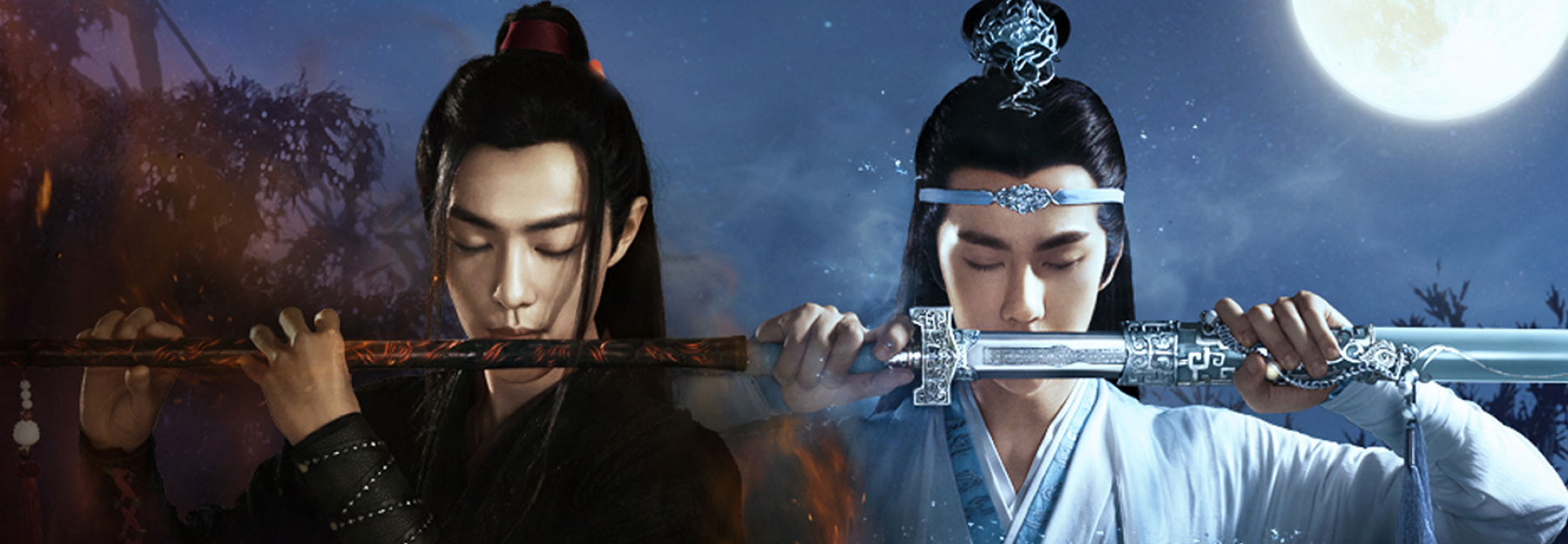
Enemies to lovers in MM romantasy.
… And why I chose not to write it?
What is the enemies-to-lovers trope, why does it hit so hard in MM romantasy, what are the best gay enemies-to-lovers fantasy books I’ve read, including danmei, and why did I twist this trope in my own books?
Covered: ◊ The Grandmaster of Demonic Cultivation / The Untamed ◊ Captive Prince ◊ The Magpie Lord ◊ Prince of the Sorrows ◊ The Taj and Song Trilogy ◊
◊
What is enemies to lovers in MM romantasy?
The trope.
Enemies to lovers is a romantic storytelling trope where two characters begin their relationship in conflict: as rivals, adversaries, or outright enemies, who gradually (or explosively!) fall in love. The tension between them transforms from hostility into passion, often with the characters fighting their feelings as hard as they fight each other, because the “this shouldn’t happen” thinking is eating them alive from the inside.
Why do people love it (me included)?
What grips the heart is the slow burn payoff. The longer and harder the characters resist each other, the more earned the romance feels. Every small moment of softening hits harder because of all the conflict that came before. The intensity is remarkable, and it comes from something specific: enemies already carry a strong feeling about each other.
That feeling is hate. Hate and love are both passionate emotions, so the leap between them feels electric rather than arbitrary. Fighting someone forces you to know them. Enemies often understand each other better than anyone else does, because they’ve been paying close attention for all the wrong reasons. So when the “I see you” moment arrives and that attention finally shifts, it’s deeply intimate. The enemies-to-lovers arc typically reveals that the hatred was rooted in misunderstanding, fear, or mirrored pain, which makes the eventual vulnerability deeply satisfying.
And then there’s power and agency. Both characters are usually strong, capable, and unwilling to submit, so when they finally choose each other, it feels like a genuine decision rather than a default. Love becomes an act of will.
But why does enemies to lovers hit hardest in gay romance fantasy?
Male characters in fantasy are typically written with armor: literal and emotional. Two men socialized to be stoic, competitive, and closed off create double the walls to break down, which makes the eventual emotional opening feel monumental. Combined with fantasy archetypes like kings, rival mages, commanders, and warriors, the setup produces a specific kind of tension that gay enemies to lovers fantasy does better than almost any other genre combination.
Men with immense power are used to winning. When someone equally powerful refuses to yield, romantically or literally, that tension becomes almost unbearable. And then forbidden love layers on top of it. In MM romantasy there are usually multiple taboos stacked together: rivals who shouldn’t want each other, two men in a world where that love may be dangerous, and magic or destiny pulling them toward each other regardless.
What holds all of this together is something simpler. There’s something deeply appealing about a person who has seen your worst, your most hostile, your most guarded self, and still chooses you. It’s a story about two people brave enough to love someone who once felt like their opposite, and to discover that was never really true. In MM romantasy this often intersects with identity and self-acceptance, which is why the trope, when it’s done well, lands as hard as it does.
◊
When Enemies to Lovers Works (and Why?).
◊ The Grandmaster of Demonic Cultivation by MXTX. Drama adaptation: The Untamed.
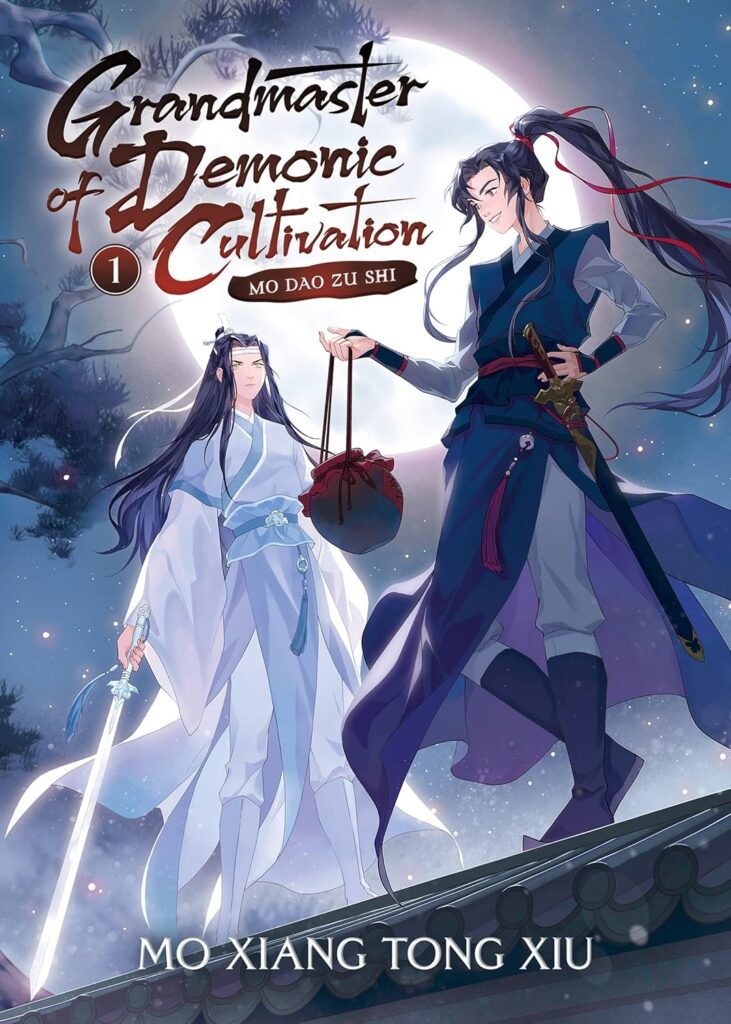
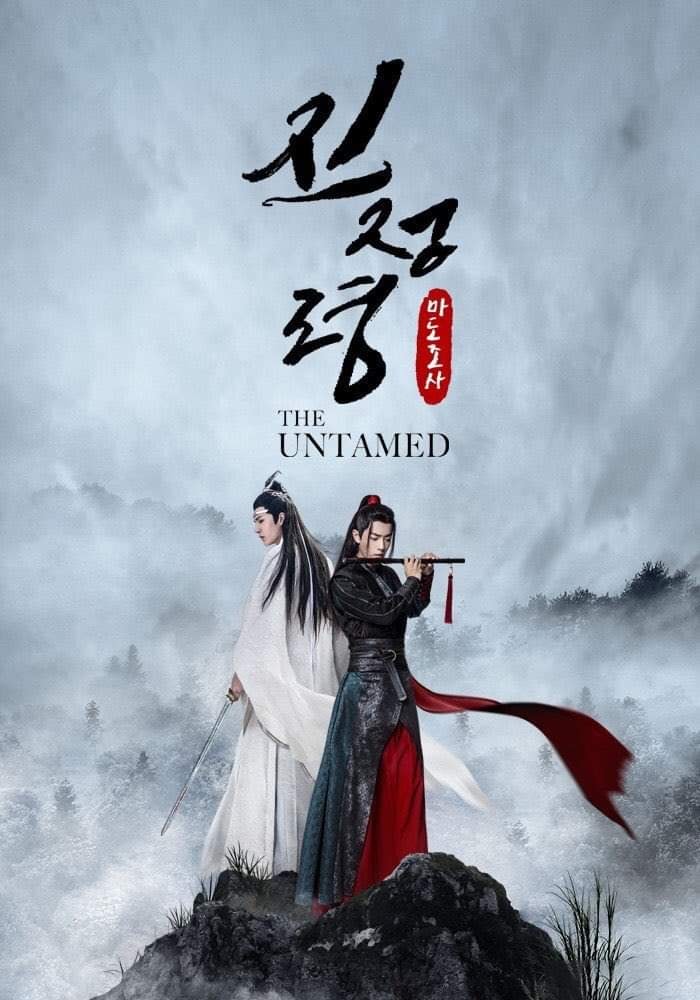
Wei Wuxian, the sharp-minded and exceptionally talented founder of demonic cultivation, was once the most feared and hated cultivator in the world, until he was hunted down in a famous clan fight.
Sixteen years later, he is accidentally resurrected into the body of a disgraced lunatic and finds himself entangled once more with Lan Wangji, the icy, rule-bound jade cultivator of the prestigious Gusu Lan Sect. A man who was once his greatest rival is now Wei’s closest companion. Together they investigate a series of dark events, and as their past slowly resurfaces, the feelings neither of them ever named also slowly show…
The books have better pacing than the drama. The adaptation restructured the timeline: the entire past story unfolds after the opening episodes, and it takes long enough that when the present timeline resumes, you are heartbroken and also a little wrung out. The opening episodes include a scene that is well-known among fans, the one where Wei plays the flute and is recognized, but its significance is impossible to feel without everything the adaptation shows later.
On the drama’s side: the two actors are extraordinary. The way they inhabit the characters is precise, and cycling through the books, then the drama, then the books again is a genuinely good way to spend several evenings.
The Untamed softens the explicit romantic content due to Chinese broadcast regulations, but the devotion and tension between Wei Wuxian and Lan Wangji remain the emotional core of the story, and it’s a thundering one. The books are explicit, but the reveal is slow and the heat builds across volumes. The plot is never abandoned for it.
This is one of the strongest examples of slow burn gay enemies to lovers fantasy in any tradition, East or West.
◊ Captive Prince (trilogy) by C.S. Pacat.
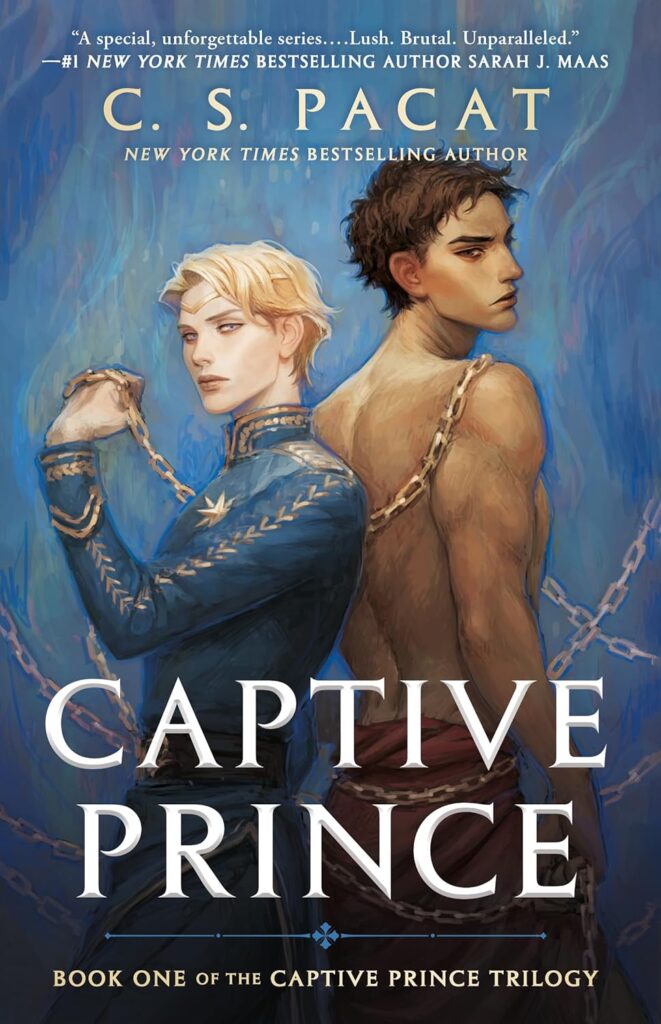
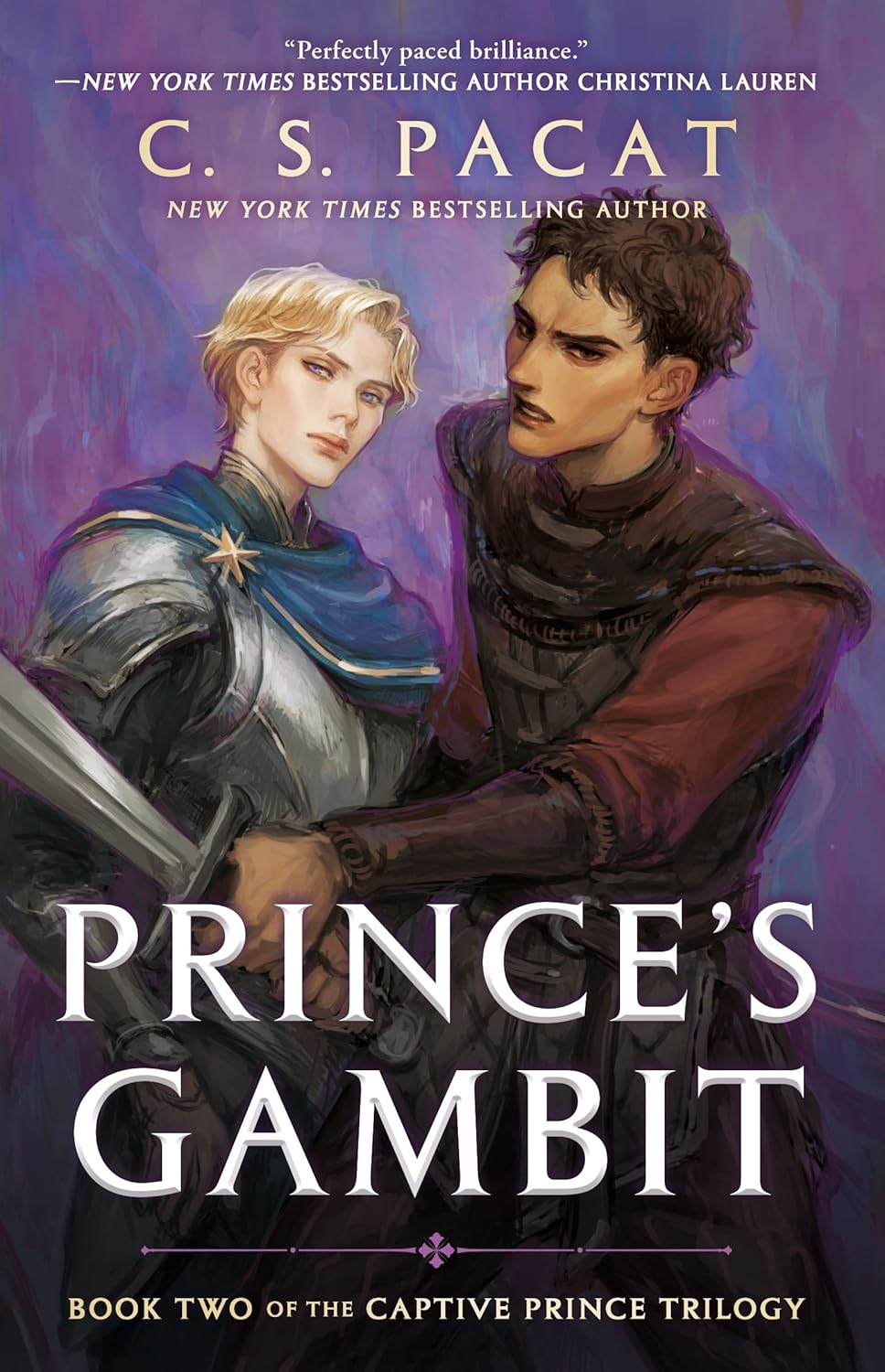
Prince Damen of Akielos is a warrior king’s son: proud, powerful, and beloved by his people. When his half-brother Kastor seizes the throne through treachery, Damen is stripped of his identity and sent as a pleasure slave to Vere, the neighboring kingdom Akielos has been at war with for a generation. His new master is Prince Laurent. Coldly beautiful, razor-tongued, and seemingly heartless. A man who has every reason to despise Akielons above all others, because Damen once killed someone very dear to him.
What begins as a relationship of captor and captive, built entirely on contempt and survival, slowly becomes something far more dangerous as Damen, forbidden from revealing who he truly is, discovers that Laurent’s cruelty is armor.
Laurent is the reason to read these books. He’s deeply disturbing in all the best ways, and the further into the story, the more sense all his actions make. The bond that forms between them, first political then personal, feels genuinely earned.
A content note: the books are explicit, and not only in the sense of the sex between the main characters. Vere as a society is saturated with sexual violence; rape functions as a political tool throughout. After rereading, the reason becomes clear, especially for book one. It builds an atmosphere of danger, draws the sharpest contrast between the two kingdoms, and once the true villain is in focus, it makes complete sense. But only then. Readers who need that context before starting deserve to have it.
Book one is the strongest, even though it is the least polished. Book two is excellent for the way it handles military strategy and shifting alliances. Book three disappointed me. The ending was rushed, and the characters acted out of character in ways that felt imposed rather than chosen. The succession question is also left entirely unexamined: two male rulers, no heirs, and the story treats this as unproblematic. Chinese danmei tends to handle this as a genuine political complication that needs a real answer.
◊
When the Trope Fails.
◊ The Magpie Lord by KJ Charles.
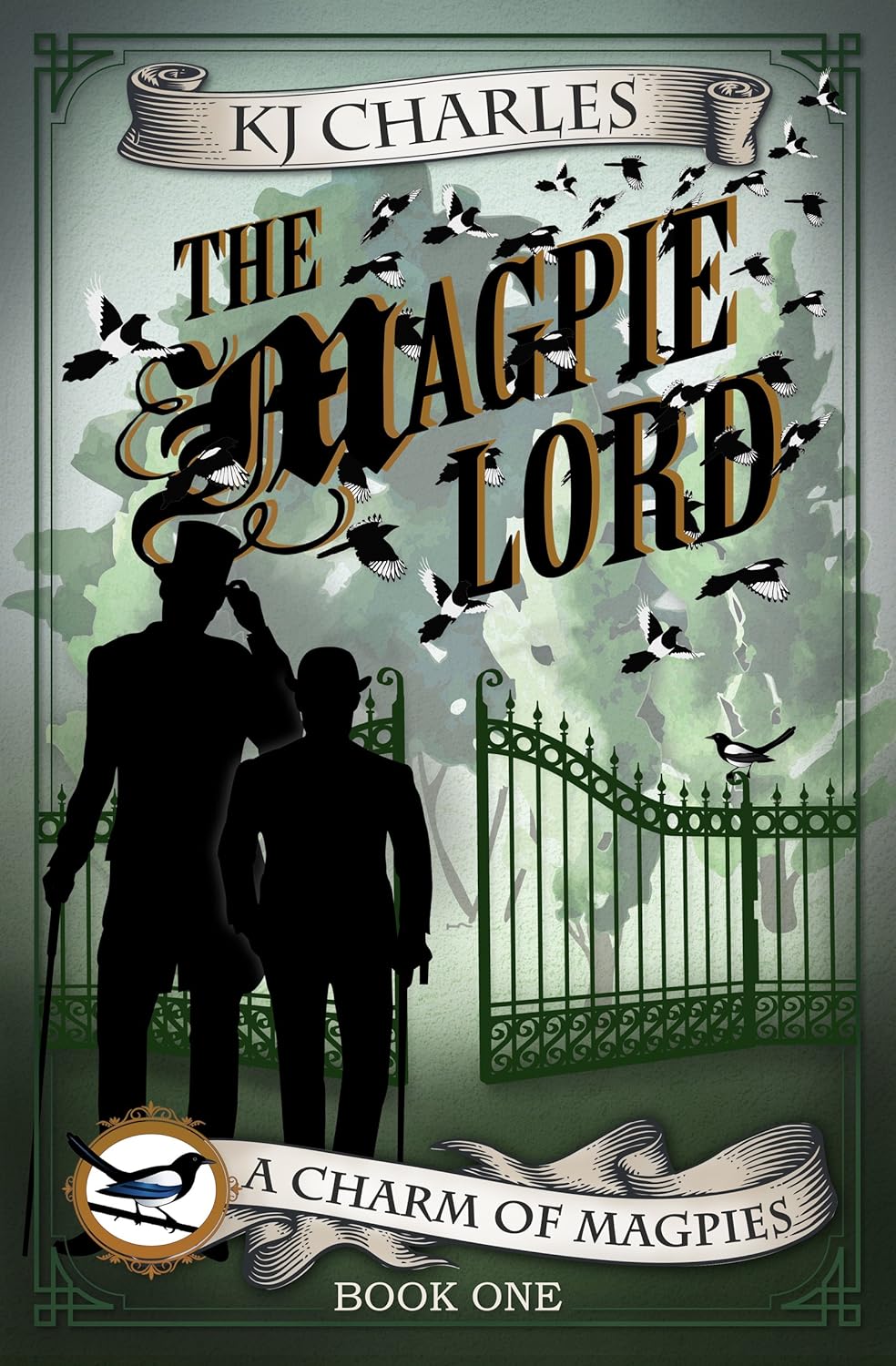
Lord Lucien Vaudrey, known as Crane, has spent twenty years in Shanghai, exiled after a youth of scandal and disgrace. When he returns to England to reluctantly claim his family’s earldom, he finds that someone is trying to kill him using dark magic. Desperate, he is forced to turn to Stephen Day, a government practitioner (a licensed magic user) and the son of the very man Crane’s family once destroyed.
Stephen has every professional and personal reason to let Crane rot. Instead, duty compels him to help, and hatred compels him to resent every moment of it. Until.
The magic and the action are genuinely good. The romance is where the book loses me. Stephen is established as a deeply righteous man, and that characterization makes the leap to lover feel skipped rather than earned. Even granting Crane a full redemption arc, the most believable outcome is that Stephen helps him survive. That’s where his character points. Instead, the book rushes into sex scenes and stacks most of them into the final pages.
◊ Prince of the Sorrows by Kellen Graves.
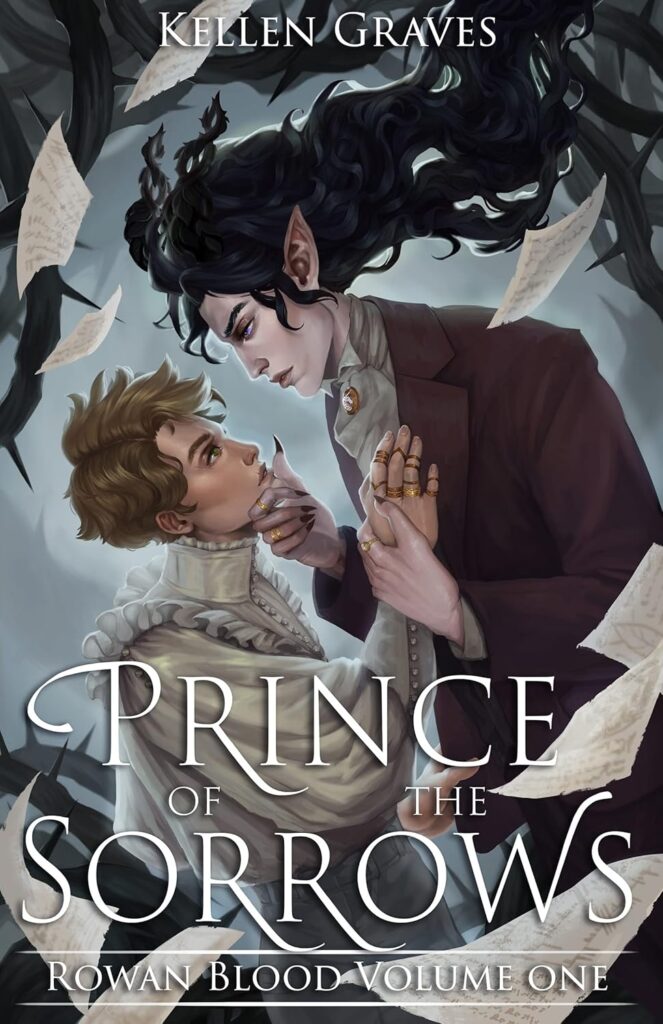
Saffron is a human servant living in Alfidel, the world of the high fey, where humans exist at the bottom of a rigid hierarchy. Forbidden from education and dependent on fey endorsement just to remain, humans are kept as servants without rights. Saffron’s literacy is self-taught, using books stolen from the campus of Morrígan Academy.
Saffron gains dangerous power when he unintentionally discovers the true name of the arrogant Prince Cylvan. What begins as a threat to Saffron’s life becomes a bargain: he will find a way to neutralize the power of Cylvan’s true name and, in return, receive the endorsement he desperately needs to avoid being sent back to the human world. They meet night after night in the library, and what develops between them is the core the book is built around: two men, an unlikely arrangement, and a slow fall into something neither of them chose.
The premise is solid, but the execution is where it collapses, in two separate directions.
The first is Saffron. The world treats him badly, and the story never makes a convincing case for why he wants to stay. At one party he is drugged, and if he hadn’t fled, he would have been sexually assaulted. Cylvan was present, but Saffron neither addresses this nor revisits it. Saffron’s colleagues are being hurt and killed around him, and his attention stays fixed on Cylvan. The story frames this as romance, but it reads more like a character whose interior has been replaced by the plot’s need to keep him in place.
The second is Cylvan. He is written as intelligent, and his motivation is specific: Lord Taran, his intended, wants to use Cylvan’s true name as a lever of control. Stripping the name of its power is self-protection, alright. But what doesn’t hold is the execution: Saffron is visibly human; his clothes and bearing make this unmistakable, and Cylvan knows exactly who he is when he asks him for help. The arrangement is structured so that if the forbidden magic is discovered, the exposure falls on Saffron. That is a strategy – but what undermines it is that Cylvan simultaneously dances with him, sleeps with him, and opens parts of the world to him that Saffron has no standing to access. In my opinion, an intelligent man running a concealed operation does not mix those two.
Finally, the problem of two men getting engaged is not addressed here either. I wonder why Cylvan and Taran are supposed to be politically involved. What could it do to protect the throne if two men are married and there are no children? I’m missing something crucial in the world building.
A well-built MM enemies-to-lovers romantasy needs both characters to have reasons for their decisions that exist independently of the romance pulling them together, but here, the romance is doing all the work.
◊
Last but not least: Why I Chose Not to Write It in My Series?
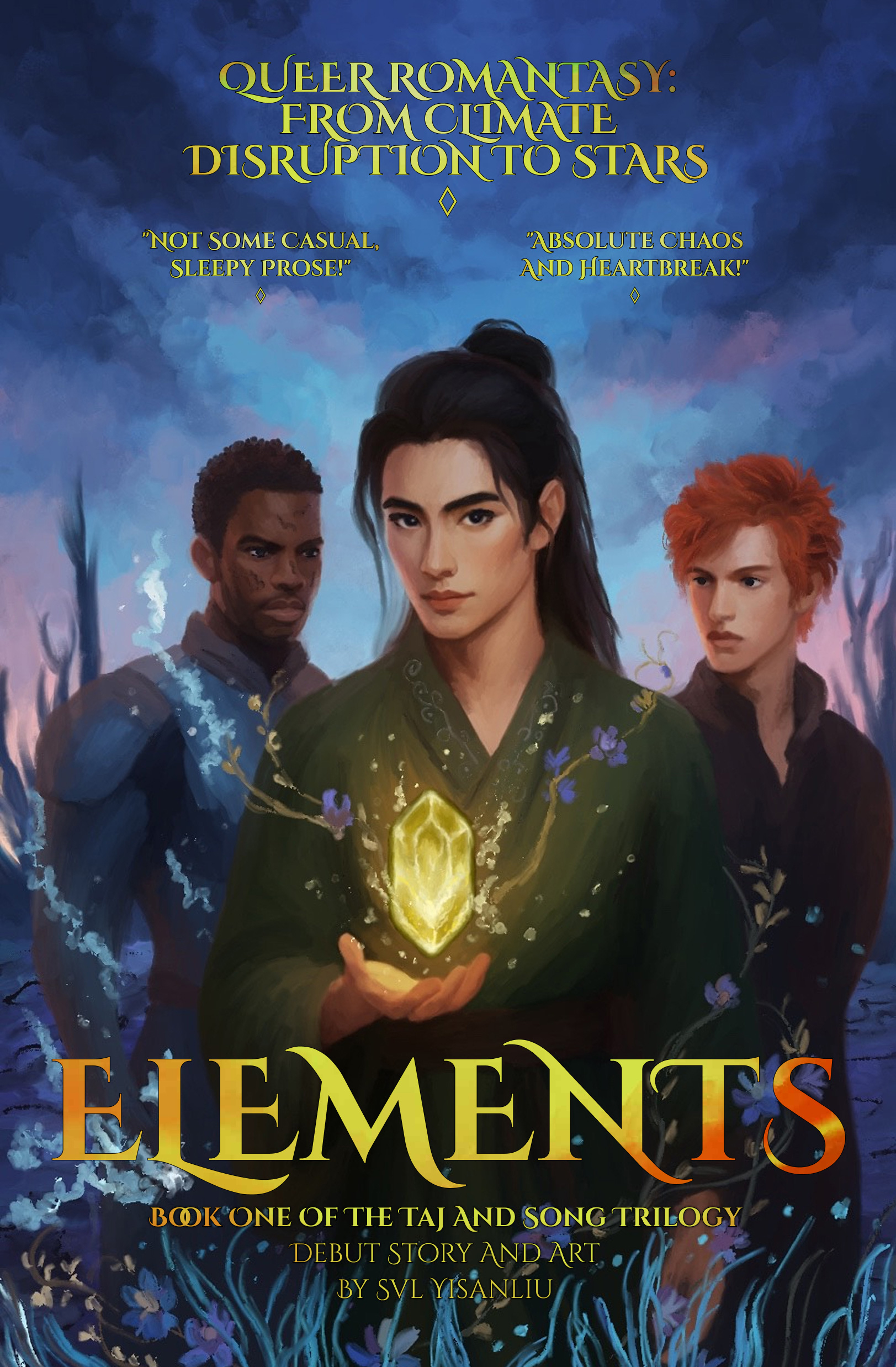
The trope is one I genuinely love, but I decided to twist it. In the first trilogy, the main character Taj is objectified for his beauty regardless of how hard he works or studies. He is trapped in debt, and his energy cultivation was destroyed by the Clar family’s invention, forced on him through criminal cartels. He wants his revenge, and when the opportunity comes, he takes it.
Riley Clar is a redheaded young man with a warm, loud personality. He loves to sail, swears constantly, and is widely liked, partly because he is heir to the City’s most powerful family: the inventors of artificial Crystals. He has money and knows exactly how to leverage it. When he meets Taj, he can’t take no for an answer. He reads Taj’s resistance as encouragement, and the dynamic spirals into unhealthy obsession.
◊ That’s the enemies setup, and the twist is in where it goes.
Taj doesn’t choose Riley. He chooses Song, and they are complicated soulmates in the way that some people simply are. The story between Taj and Riley ends with a hesitant truce and something that becomes, slowly, a kind of kinship. Riley receives no redemption for his obsession and his abusive behavior, but he gets closure: sorrowful and glad at once.
And then the story does one more thing. Within the world of the trilogy, this relationship gets fictionalized in an in-world novel that uses the enemies-to-lovers trope straight, with a single change: Taj becomes a girl named Raja, and she and Riley fight until they don’t. The in-world version tells the genre story, the actual story denies it.

Will I read more MM romance fantasy with enemies-to-lovers tropes?
Yes, and not only fantasy. I’m currently in the middle of Ballad of Sword and Wine, a historical romance danmei that sits squarely in this territory. Thoughts on that one are coming.
Read about my other review of Chinese MM romantasy books (danmei) here. For more, check my blog, and to receive notifications of new reads, follow me on Goodreads.